Digital transformation has radically changed the way small and mid-size firms operate. Organizations have transitioned beyond centralized office spaces to distributed digital ecosystems that are driven by SaaS platforms, cloud systems, remote offices, and mobile computing devices over the past ten years. Though this transformation has made innovation and flexibility faster, it has also developed new cybersecurity challenges.
Traditional security architectures were designed for an era when employees worked within corporate networks protected by hardware firewalls and perimeter-based security tools. Today, however, corporate data flows across cloud platforms, third-party applications, and remote endpoints. As a result, conventional security models struggle to protect modern business environments.
This is why SASE for Small and Mid-Size Businesses has emerged as one of the most important cybersecurity strategies for 2026. Secure Access Service Edge integrates networking and security capabilities into a single cloud-delivered platform designed to protect distributed workforces and cloud applications.
Industry analysts increasingly view SASE as the future of network security. According to Gartner, more than 60% of enterprises are expected to adopt a SASE architecture by 2026 as organizations move toward cloud-centric infrastructure and zero-trust security models. At the same time, small and mid-size businesses are actively searching for the best SASE solution for small businesses that balances security capabilities with cost efficiency.
For organizations evaluating affordable SASE for SMBs, the architecture provides a powerful opportunity to simplify network management, improve threat visibility, and secure remote work environments without deploying complex hardware infrastructure.
Consltek consulting companies have a significant role to play in assisting businesses in their design and implementation of modern security architectures to meet long-term strategies of digital transformation.
What Is Secure Access Service Edge (SASE)?
Definition of SASE in Simple Terms
Secure Access Service Edge is a cloud-native architecture that provides interwoven wide-area networking with built-in cybersecurity services. SASE integrates VPN access, firewalls, web filtering, and cloud security monitoring into one single platform instead of using different tools to accomplish this task, provided on a distributed cloud infrastructure.
Practically, a cloud-native SASE platform guarantees that security policies accompany the users as opposed to being attached to a physical network perimeter. With this method, organizations are able to lock employees, gadgets, and software down wherever they are.
Firms looking for SASE implementation for small business environments tend to utilize the architecture to ease the security controls, but achieve a similar security protection to all cloud services and remote access locations.
Why Gartner Introduced the SASE Framework
Gartner published the SASE framework in 2019, which is meant to fill the widening divide between the old paradigm of network security and the new cloud-based infrastructure. Traditional security designs employed centralized corporate data centers in which the network traffic could be poked in before it could get inside the internal systems. Nevertheless, the swift development of cloud computing and the use of SaaS and remote work have entirely transformed the way organizations access data. Instead of connecting to applications located in internal networks, the employees have to connect to applications hosted in various cloud platforms.
Gartner predicts that by 2025, at least 60% of enterprises will have explicit strategies and timelines for SASE adoption encompassing user, branch, and edge access, up from just 10% in 2020.
Noting this change, Gartner introduced a new design that incorporates both networking and security under one cloud-provided service design. With this model, organizations have the ability to implement security policies that are closer to the user environment and the devices, yet provide a uniform level of protection within the distributed environments. Organizations that deploy SASE for remote workforce security measures to provide workforce remote flexibility are currently using this architecture to enable hybrid workplaces and mitigate the use of outdated VPN infrastructure.
Core Components of a SASE Architecture
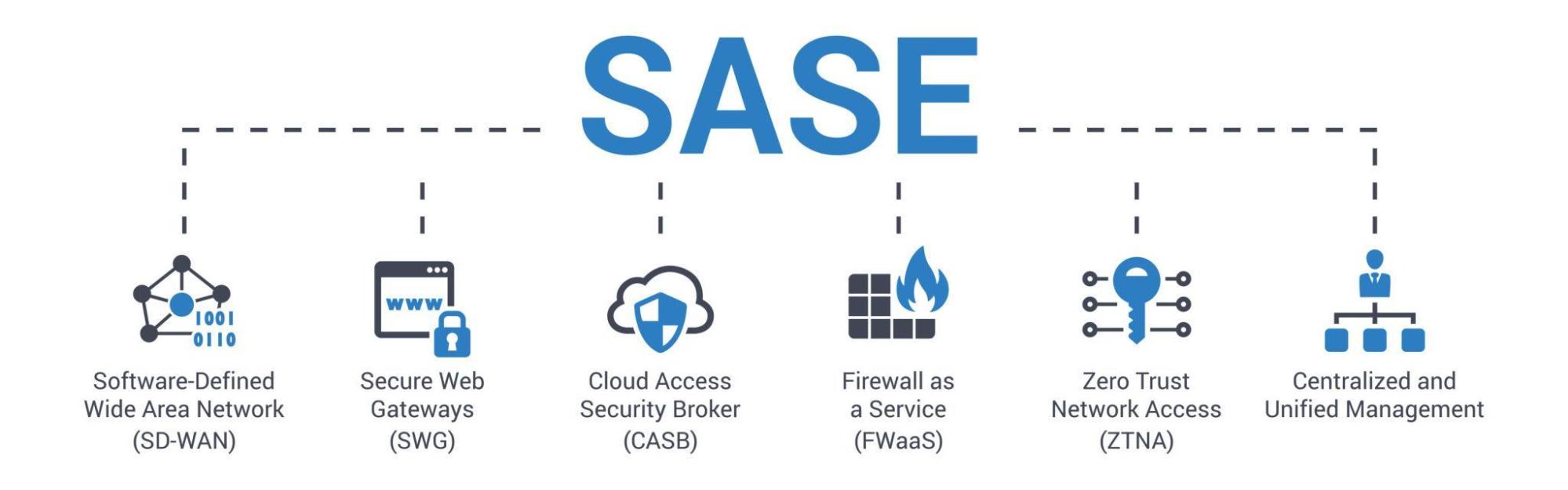
A complete SASE architecture integrates several technologies into a unified platform that delivers networking optimization and security enforcement through the cloud.
1. SD-WAN
Software-defined wide area networking serves as the connectivity foundation within a SASE architecture. SD-WAN allows organizations to dynamically route traffic across multiple network paths, improving application performance while reducing latency.
Understanding the SASE vs SD-WAN difference is essential for IT leaders evaluating network modernization strategies. While SD-WAN improves connectivity and traffic routing, it does not inherently provide advanced cybersecurity capabilities. SASE extends SD-WAN functionality by integrating security services such as Zero Trust Network Access and firewall protection.
2. Secure Web Gateway (SWG)
Secure Web Gateway technology protects organizations from web-based threats by inspecting internet traffic and blocking malicious websites. As employees increasingly rely on web-based applications and collaboration platforms, internet traffic has become one of the most common attack vectors.
Within a SASE environment, SWG capabilities operate through distributed cloud nodes that analyze traffic before it reaches users. This approach provides consistent protection across remote workers and branch offices.
For organizations exploring affordable SASE for SMBs, SWG capabilities provide an important first layer of defense against phishing attacks, malware downloads, and malicious domains.
3. Cloud Access Security Broker (CASB)
Cloud Access Security Broker technology enables visibility and control of interactions among employees with the SaaS applications. Since organizations are moving towards cloud-based platform development for collaboration, finance and operations, there is a need to ensure that sensitive information within these applications is safeguarded.
CASB tools track user activity, implement data protection measures and identify abnormal behavior within the clouds. As a component of a SASE architecture, CASB enables organizations to have a uniform security policy across various SaaS applications.
Consulting providers such as Consltek help organizations integrate CASB capabilities with existing cloud infrastructure to ensure secure access across distributed environments.
4. Firewall-as-a-Service (FWaaS)
Firewall-as-a-Service Refuses to install the hardware firewall but provides security inspection on clouds. Organizations deploy distributed cloud security nodes, which examine network traffic prior to reaching an application instead of placing the physical appliances inside corporate networks.
This migration represents the more general move to cloud-native SASE platforms, in which scalable security functionality is dynamically updated as businesses expand.
When comparing traditional firewall vs SASE architecture, companies tend to find that FWaaS is much easier to operate and has greater capacity to scale further, in addition to enhancing the ability to identify threats.
5. Zero Trust Network Access (ZTNA)
Zero Trust Network Access is one of the most important elements of modern zero trust SASE architectures. Unlike traditional security models that assume trusted network boundaries, ZTNA requires continuous verification of user identity, device posture, and contextual risk factors before granting access to applications.
This is the basis of zero trust SASE architecture, which guarantees that all connection request is authenticated and authorized on identity basis instead of network location.
Companies that have outgrown the use of VPN-based remote access systems are progressively turning to ZTNA to enable SASE for remote workforce security.
Why Small and Mid-Size Businesses Need SASE in 2026
The Rise of Remote and Hybrid Work
Remote and hybrid work are now a permanent part of the modern workforce. Employees access corporate resources from home offices, coworking spaces, and mobile devices.
But the key question is: Was your network security designed for this level of distributed access?
Traditional VPN systems were built for occasional remote connectivity, not for today's always-on distributed operations. As usage increases, VPNs often create performance bottlenecks and potential security vulnerabilities.
By adopting SASE for remote workforce security, organizations can provide secure connectivity through distributed cloud nodes rather than centralized gateways. Technology partners like Consltek help businesses design secure remote access architectures that maintain both productivity and strong cybersecurity protections.
Cloud Adoption in SMBs
Cloud adoption among SMBs has accelerated rapidly. SaaS is used by numerous organizational structures today to collaborate, manage finances, and perform operations.
Actually, as per the Flexera State of the Cloud Report, over 90 percent of enterprises depend on cloud infrastructure and SaaS platforms.
This shift raises an important question: How do you protect data spread across multiple cloud platforms?
Organizations adopting cloud-native SASE platforms gain centralized visibility across cloud applications, enabling IT teams to detect threats faster and enforce security policies consistently.
Increasing Cyber Threats Targeting SMBs
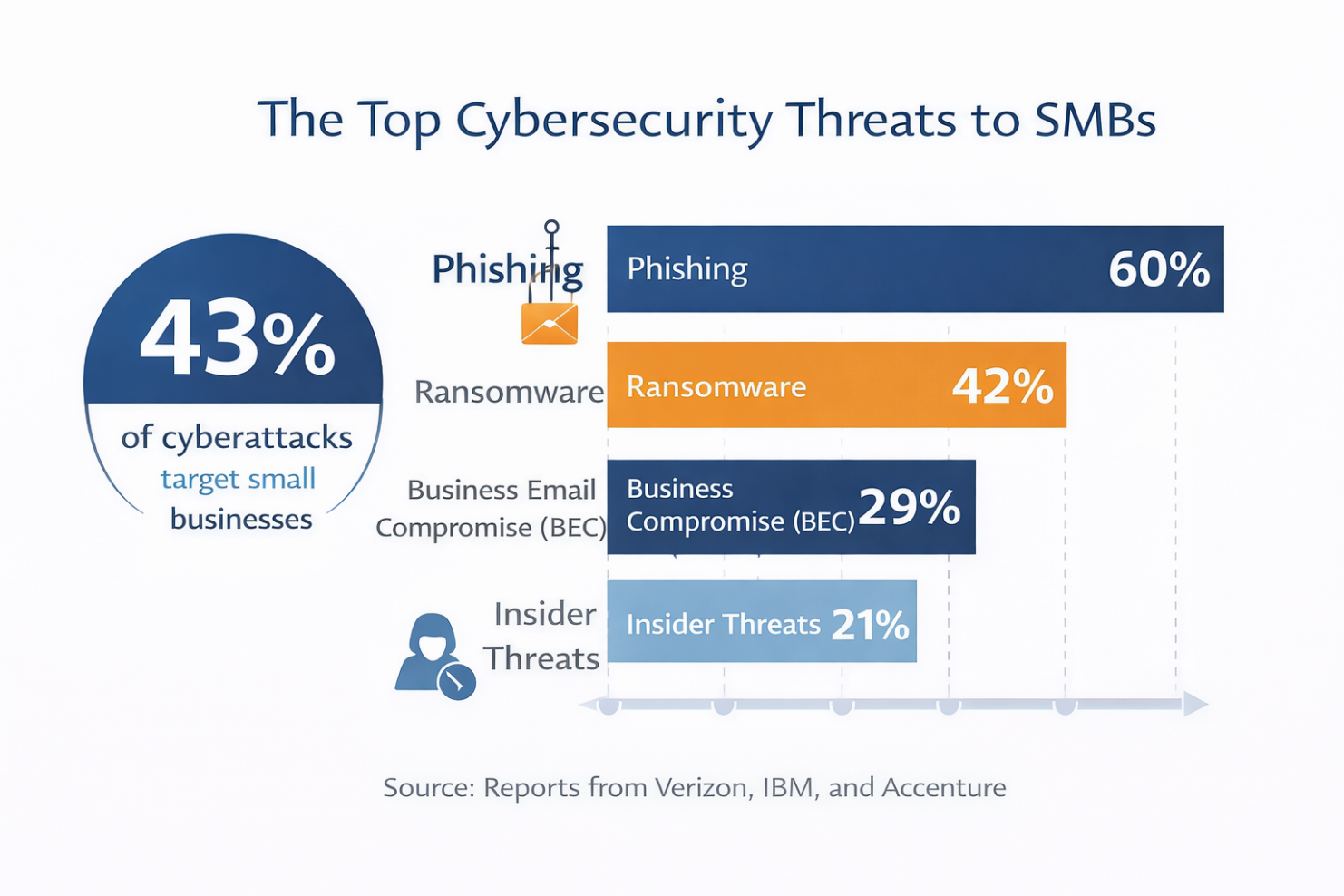
Small businesses are becoming a frequent target of cybercriminals due to their insufficient cybersecurity resources.
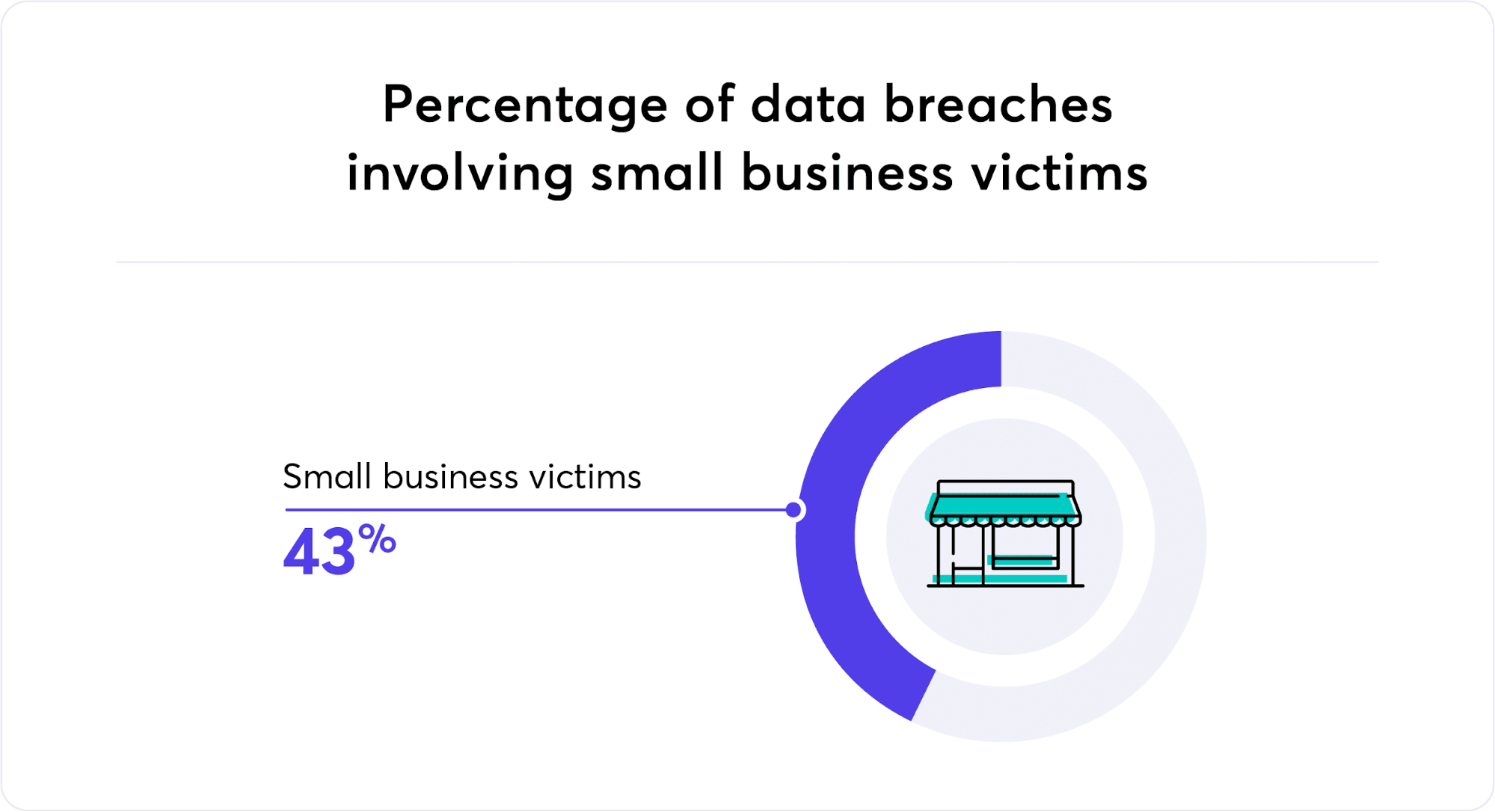
The Verizon Data Breach Investigations Report has shown that about 43 percent of the cyberattacks are conducted against small and mid-size organizations. Phishing, ransomware attacks, and credential theft cases are on the increase.
So how can SMBs strengthen their defenses?
AI-based SASE security services deployed on modern platforms scan and analyze the traffic patterns on the network and identify abnormalities in real-time to enable organizations to recognize threats before they grow into bigger incidents.
Compliance and Data Protection Requirements
Many organizations must also comply with strict data protection regulations such as GDPR, HIPAA, and PCI DSS.
This leads to another challenge: How can businesses maintain consistent security policies across distributed networks and cloud platforms?
SASE helps to ease compliance because security monitoring, access controls, and policy enforcement are all in a centralized location.
When businesses are in need of managed SASE solutions to protect SMBs, consulters such as Consltek are regular partners that help them ensure their cybersecurity policies are formed with references to regulatory demands, as well as promote future expansions.
How SASE Helps Secure Cloud-Driven Environments
Securing SaaS Applications
The most significant business processes are now being enabled by SaaS applications that include teamwork and finance to customer relationship management.
And this begs a critical question: how safe are such applications when the employees are using them with the use of uncontrolled devices or external networks?
One of the ways that SASE architectures address this challenge is through combining CASB technology with identity-based access controls. Such capabilities enable organizations to track user activity, identify suspicious actions, and implement a set data protection policy across cloud applications to assist businesses in maintaining a secure SaaS environment.
Protecting Remote Users and Branch Offices
The contemporary organizations are way more than the conventional office network. Employees make contact at home, branch offices and mobile phones.
How can businesses then have uniform security in all these points of access?
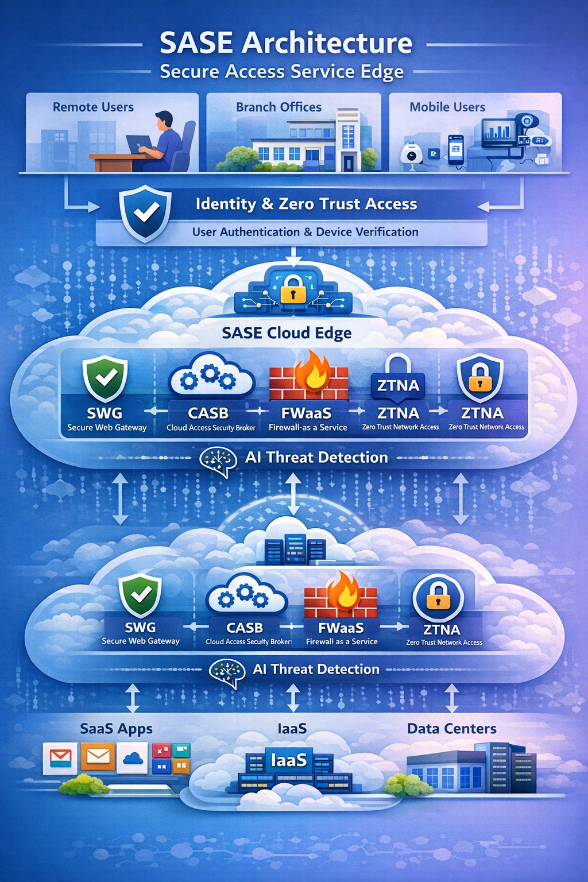
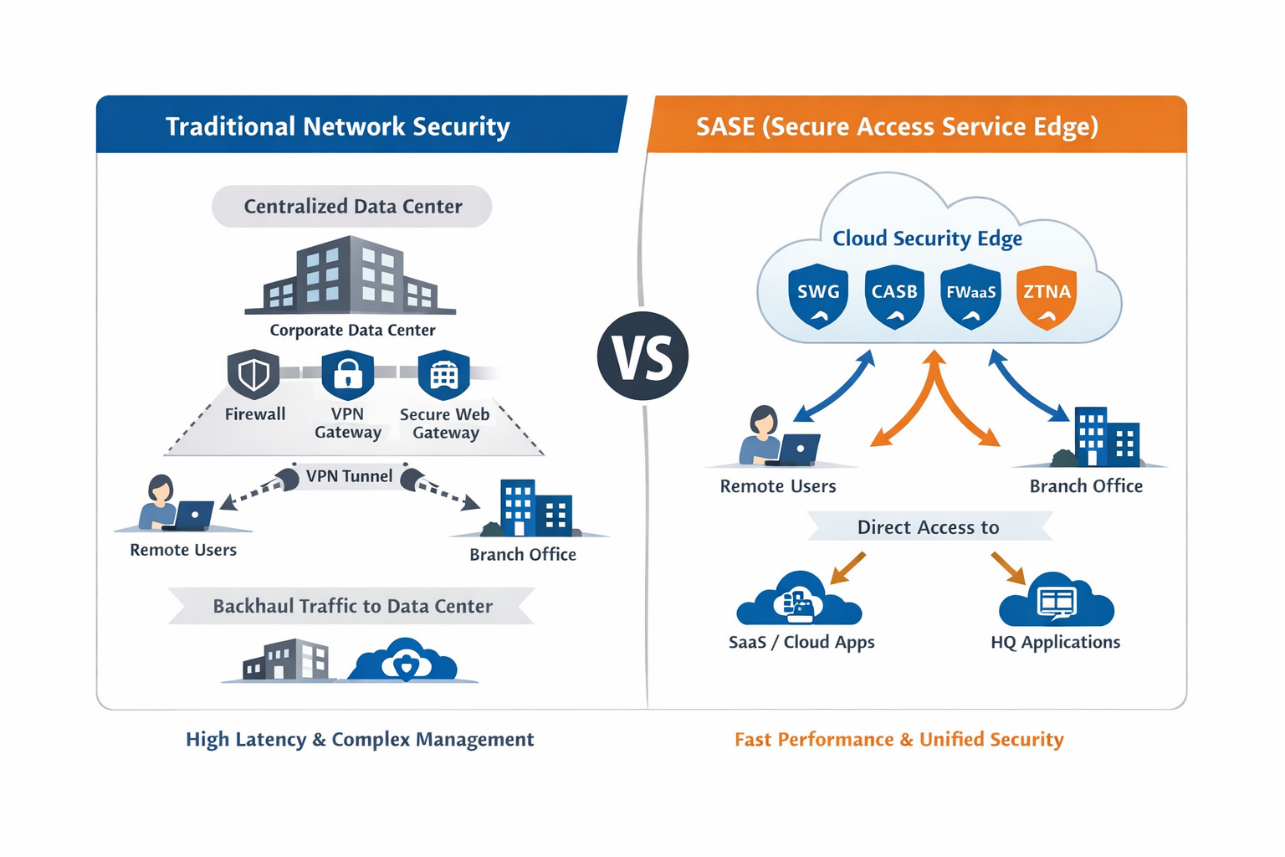
SASE provides users with the ability to connect to the closest cloud security node, wherein the traffic is examined and checked before accessing applications. Such a distributed system minimizes latency but ensures high-strength security controls. Consequently, most organizations that use SASE for remote workforce security tend to have improved application performance than their traditional VPN systems.
Unified Security and Networking
One of the biggest advantages of SASE is its ability to combine networking and security into a single unified platform.
Policies can be implemented using centralized dashboards instead of having a set of tools, such as firewalls, VPNs and monitoring systems. Such a single platform makes operations simpler and provides IT teams with much more visibility in respective network, user, and cloud environments.
Reducing Complexity with Cloud-Native Architecture
Traditional security infrastructure often requires constant hardware maintenance, firmware upgrades, and manual patching.
But what if security could be managed without maintaining physical appliances?
With cloud-native SASE platforms, security services are delivered directly through the cloud. Organizations benefit from automatic updates, scalable protection, and simplified network management, thereby allowing IT teams to focus on strategy rather than infrastructure maintenance.
Key Benefits of SASE for Small and Mid-Size Businesses
There are reported strategic benefits in organizations having SASE architectures. Rather than integrated fragmented security software and hardware infrastructure, SASE delivers an integrated networking and security platform to a cloud environment.
Why does this matter? Modern businesses are distributed environments and provide access to applications at multiple locations, where distributed employees access them via different devices.
Let’s explore the key benefits.
1. Cost Efficiency and Reduced Hardware Dependency
Conventional network security involves the use of several hardware that is enclosed on-premises as firewalls, VPN concentrators, and secure web gateways. Such systems include maintenance, up upgrades, and running expenses.
SASE migrates them to the cloud and becomes hardware-independent to a great extent. This has turned affordable SASE for SMBs in many organizations to be make-a-go with even small budgets allocated to IT.
Quick fact- Hardware-based security infrastructure can consume 30-40% of network security budgets when maintenance and upgrades are included.
2. Scalability for Growing Businesses
Small and mid-sized companies tend to expand rapidly and add new offices, recruit new staff in person, or take on remote workers. However, is traditional infrastructure scalability the same?
SASEs are scalable since they are run on cloud computing. By just adding users or devices, organizations are able to extend security coverage without necessarily adding hardware.
Companies seeking an optimal SASE solution for small businesses can rely on this scalability as a security environment conforms to business expansion.
3. Improved Network Performance
Another significant benefit is performance. Rather than passing all traffic over centralized corporate networks, SASE applies distributed cloud edge nodes in order to process traffic nearer to users.
This architecture minimizes latency and enhances the responsiveness of the application, particularly when employees use the SaaS services or cloud services.
Industry understanding: The research conducted has indicated that distributed edge architecture may foster the performance of the applications by 20-40% than that of conventional VPN routing.
For organizations implementing SASE for remote workforce security, this translates directly into better employee productivity.
4. Simplified Security Management
IT teams can easily become overwhelmed by keeping the number of security tools high under management.
SASE eases the processes by encompassing both network and security through a single management framework. The administrators are able to implement policies, monitor threats, and control access in with a single dashboard.
This unified approach reduces operational complexity while giving IT teams better visibility across networks, users, and cloud environments.
5. Built-In Zero Trust Security Model
Security strategies are increasingly moving toward Zero Trust architectures.
SASE platforms incorporate Zero Trust Network Access (ZTNA), which verifies every connection based on identity, device posture, and contextual risk signals.
Instead of assuming trust based on network location, the system continuously validates users and devices before granting access.
Security insight: According to NIST Zero Trust guidelines, identity-based access control significantly reduces the risk of credential-based attacks and unauthorized lateral movement.
This built-in zero-trust SASE architecture makes SASE a powerful alternative to traditional perimeter-based security models.
Emerging Trends in SASE for SMBs
Cybersecurity is changing quickly with the introduction of the use of cloud infrastructure and a distributed work environment by organizations. Artificial intelligence-based SASE security is one of the most significant advances since machine learning is applied to the network traffic patterns and detects the presence of abnormal activity.
Why is this important? Owing to the increasing speed of cyber threats. Indeed, research indicates that cyber-attacks have grown by over 38 percent in the past years around the world, compelling organizations to look at smarter methods of detecting such attacks.
#1 AI-Driven Security and Threat Detection
SASE platforms are emerging to become artificial intelligence-enabled. AI is especially significant because it can be used to identify anomalies and suspicious activity in high network data more effectively than other rules-based systems.
#2 Predictive Threat Intelligence
Predictive threat intelligence is a machine learning tool that examines past attack patterns and actions on the network. This enables security systems to detect possible threats before developing into key incidences- a very useful feature to SMB, which have small security teams.
#3 Automated Incident Response
Another growing capability is automated incident response. AI-powered systems can automatically isolate compromised devices, block malicious traffic, and trigger remediation workflows. This automation reduces response time and lightens the workload for IT teams.
#4 Edge Computing Integration
Edge computing brings processing capabilities closer to users and devices, reducing latency and improving performance for cloud applications. SASE architectures integrate edge computing with distributed security nodes to deliver both performance and protection.
#5 SASE + Multi-Cloud Strategy
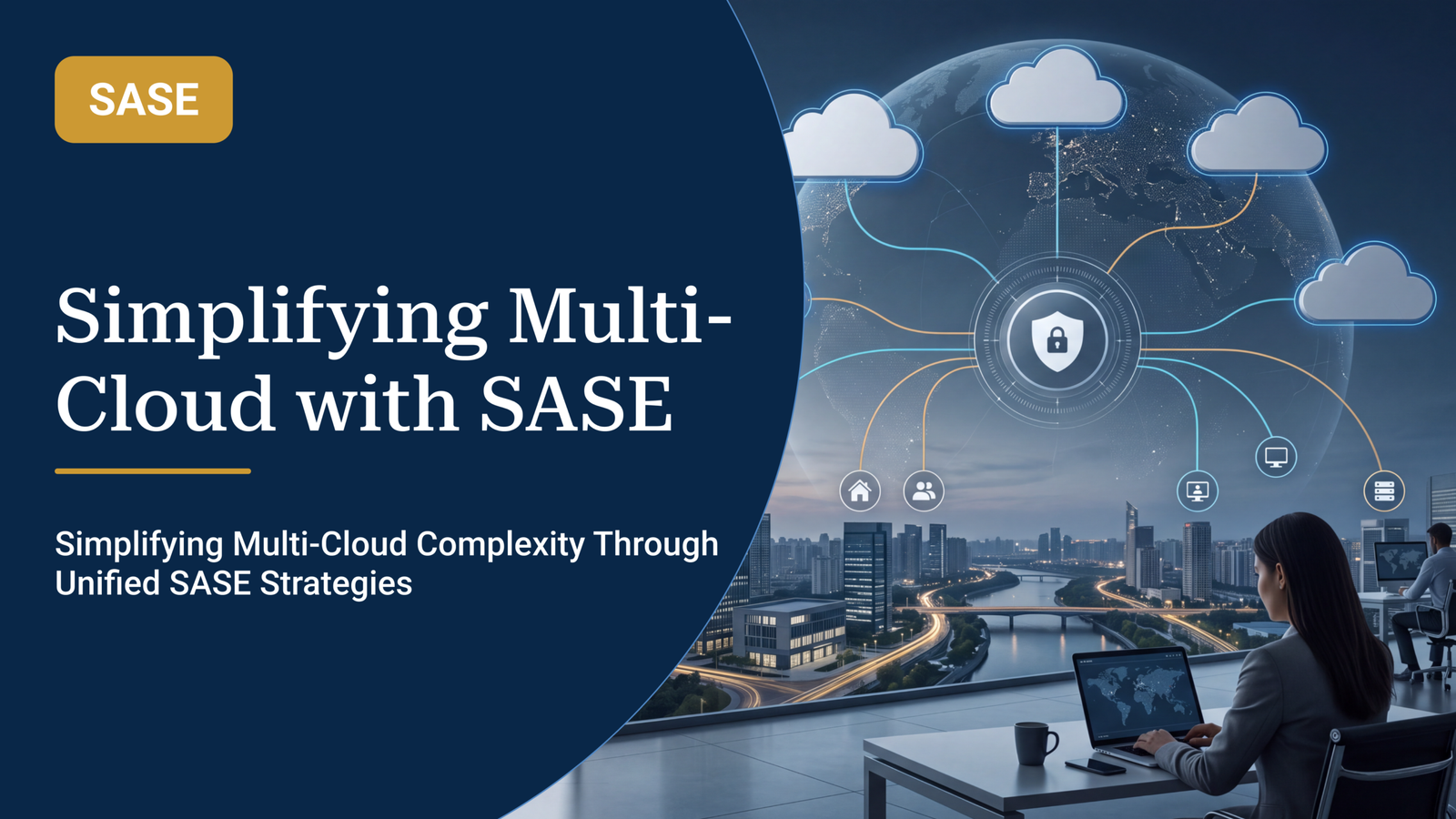
Most of the organizations have been made to work with multiple cloud providers. SASE platforms enhance securing of these settings by making sure that there is the implementation of uniform security policies to cloud platforms.
SASE vs Traditional Network Security: What's the Difference?
Comparison Table
Feature
SASE
VPN
SD-WAN
Security Model
Zero trust architecture
Tunnel-based access
Network optimization
Deployment
Cloud-native
Appliance-based
Hybrid
Scalability
High
Moderate
High
Security Integration
Unified security stack
Limited
Limited
Ideal Use Case
Cloud-first environments
Legacy remote access
Traffic optimization
The SASE vs VPN for small business argument emphasizes that the conventional VPN offers network-level access as opposed to application-level access. This may pose security threats when they eventually succeed to access internal systems with compromised devices.
Likewise, SASE vs SD-WAN difference highlights the significance of an inbuilt security functionality. SD-WAN enhances connectivity, but does not offer end-to-end cybersecurity.
SASE Architecture Diagram
SASE vs Traditional Network Diagram
How to Implement SASE in a Small or Mid-Size Business
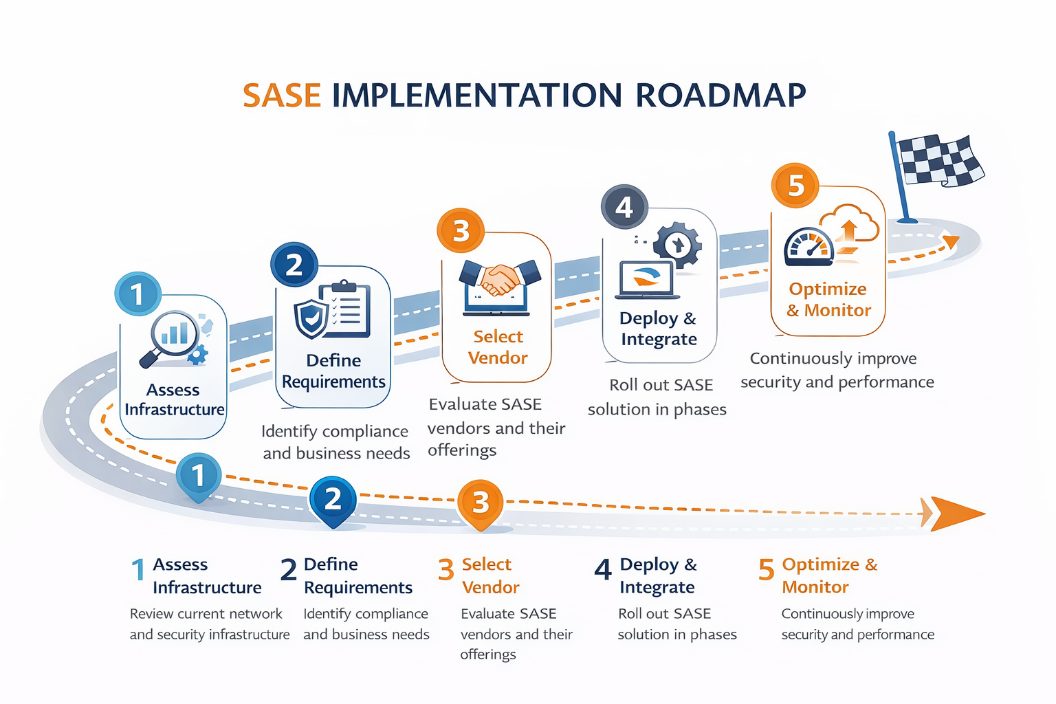
The first question that should be posed by organizations before embarking on SASE is; Is their existing network infrastructure prepared to make this transition? The process would usually start by analyzing current IT architecture, IT security tools and access controls in order to detect vulnerabilities and gaps in operations. Companies also need to establish regulatory requirements and data security needs, as standards, such as GDPR or PCI DSS, tend to affect cybersecurity policies. The next significant step is the selection of the appropriate SASE vendor - one who has powerful platform features, easy integrations, and global infrastructures.
Partnering companies like Consltek can assist the organizations in the evaluation of vendors and determining the most suitable SASE solution for the small business.
Depending on whether the companies would manage the platform or go with the managed SASB services aimed at SMB, the companies have to make decisions about managing the platform or going down the road of managed services.
The industry reports, in fact, indicate that more than 60 percent of SMBs are currently depending on managed security providers since most of them lack expertise internally. Most companies adopt a gradual implementation strategy to avoid unnecessary interference, transforming remote access, integrating cloud security, and then performing network optimization.
Assess Your Current IT and Security Infrastructure
Define Business and Compliance Requirements
Choose the Right SASE Vendor
Managed SASE vs In-House Deployment
Phased Implementation Strategy
Challenges SMBs May Face When Adopting SASE
Although SASE has considerable advantages, it has a number of challenges to adoption. Budget restrictions are one of the most frequently raised issues because the initial transition might involve spending on new platforms, consultancy services, and infrastructure upgrades.
Lack of skills among IT teams is also a problem that many SMBs have to deal with, as the implementation of sophisticated cybersecurity architectures involves a set of specialized skills.
Vendor lock-in is another phenomenon in which organizations are required to rely on the ecosystem of one provider unless such platforms have been strategically considered. Moreover, the process of migration may be complicated when migrating legacy systems to newer systems, and steps have to be taken to ensure that the existing systems and networks are integrated appropriately.
This poses a critical query to most businesses: How can companies restructure their security architecture without affecting the day-to-day performance?
Proper planning, assessment of vendors, and staged plans of deployment will allow SMBs to surmount these challenges and enable them to successfully shift to a contemporary SASE-driven security model.
How to Choose the Right SASE Solution for Your Business
When selecting an appropriate SASE solution, the first but not the least question should be the following:
Does the platform really meet your security and operational requirements?
The primary capabilities that businesses must consider initially encompass Zero Trust Network Access (ZTNA), CASB integration, the use of artificial intelligence to detect threatening behavior, and coverage of the network across distributed environments. Simultaneously, the platform should work well with the existing identity management platforms, cloud services, and security solutions- since new technology implementation should make the work easier, but not harder.
Companies that work in the controlled industries also need to check that the SASE provider is compatible with the applicable compliance framework and reporting regulations, which enables them to address such standards as GDPR, HIPAA, or PCI DSS. The other feature is pricing structure: the majority of vendors provide subscription models, and some use the use-based model depending on the traffic or number of users.
The knowledge about these models will enable businesses to choose a solution that reflects the reliability of the costs and locations that are equally scalable, to make sure that the selected platform can cover not only the ongoing businesses but also the future growth.
Key Features to Look For
Integration with Existing Tools
Compliance and Regulatory Support
Pricing Models (Subscription vs Usage-Based)
The Future of SASE for Small and Mid-Size Businesses
AI-based automation, cloud-native networking, and industry-specific security solutions will determine the future of SASE in the case of SMBs. The increase of AI-native security platforms is one of the key changes, as artificial intelligence assists in detecting anomalies, prioritizing threats, and automating responses; thus, organizations can respond to cyber risks more quickly than traditional frameworks.
The rise of SASE with Secure Service Edge (SSE), which aims at fortifying basic security services (Zero Trust access, secure web gateways, and cloud application protection), is another significant trend.
Automation will also have an increasing role in lessening man-power security operations and increasing the incident response time. Simultaneously, cybersecurity solution providers are creating industry-specific SASE offerings based on industry-specific compliance demands and threat variability, such as medical care, financial, and retail sectors.
In the case of small and mid-size businesses, these innovations promise a time when security will become smarter, more automated, and focused on industry requirements.
Talk to a SASE Expert
SASE architecture is a technique that needs to be planned to be integrated with legacy infrastructure. Organizations that are considering the most appropriate SASE solution to use when dealing with small businesses usually are guided by experts.
Consltek offers managed infrastructure solutions and consulting services that assist organizations in implementing managed SASE services for SMBs, updating their cybersecurity frameworks, and ensuring cloud security.
Get to know more about the Zero trust security, cloud infrastructure consulting, and managed cybersecurity services at Consltek.
SASE is a cloud-based architecture that combines networking and cybersecurity services, securing users and applications by routing traffic through distributed cloud nodes that apply identity verification, threat inspection, and access controls.
Yes, many organizations adopt affordable SASE for SMBs because it reduces hardware costs while providing scalable, cloud-delivered security and networking capabilities.
SD-WAN focuses on optimizing network connectivity, while SASE integrates SD-WAN with advanced security services such as Zero Trust Network Access and cloud-based firewalls.
SASE solutions typically cost around $7–$25 per user per month, depending on vendor features, scale, and whether managed services are included.
Yes, SASE often replaces traditional VPNs by using Zero Trust Network Access (ZTNA) to provide secure application-level access instead of full network access.
SASE supports Zero Trust by verifying every connection using identity authentication, device posture checks, and continuous monitoring before granting access.
AI-driven SASE improves cybersecurity by detecting anomalies in real time, enabling predictive threat intelligence, automating incident response, and reducing false security alerts.